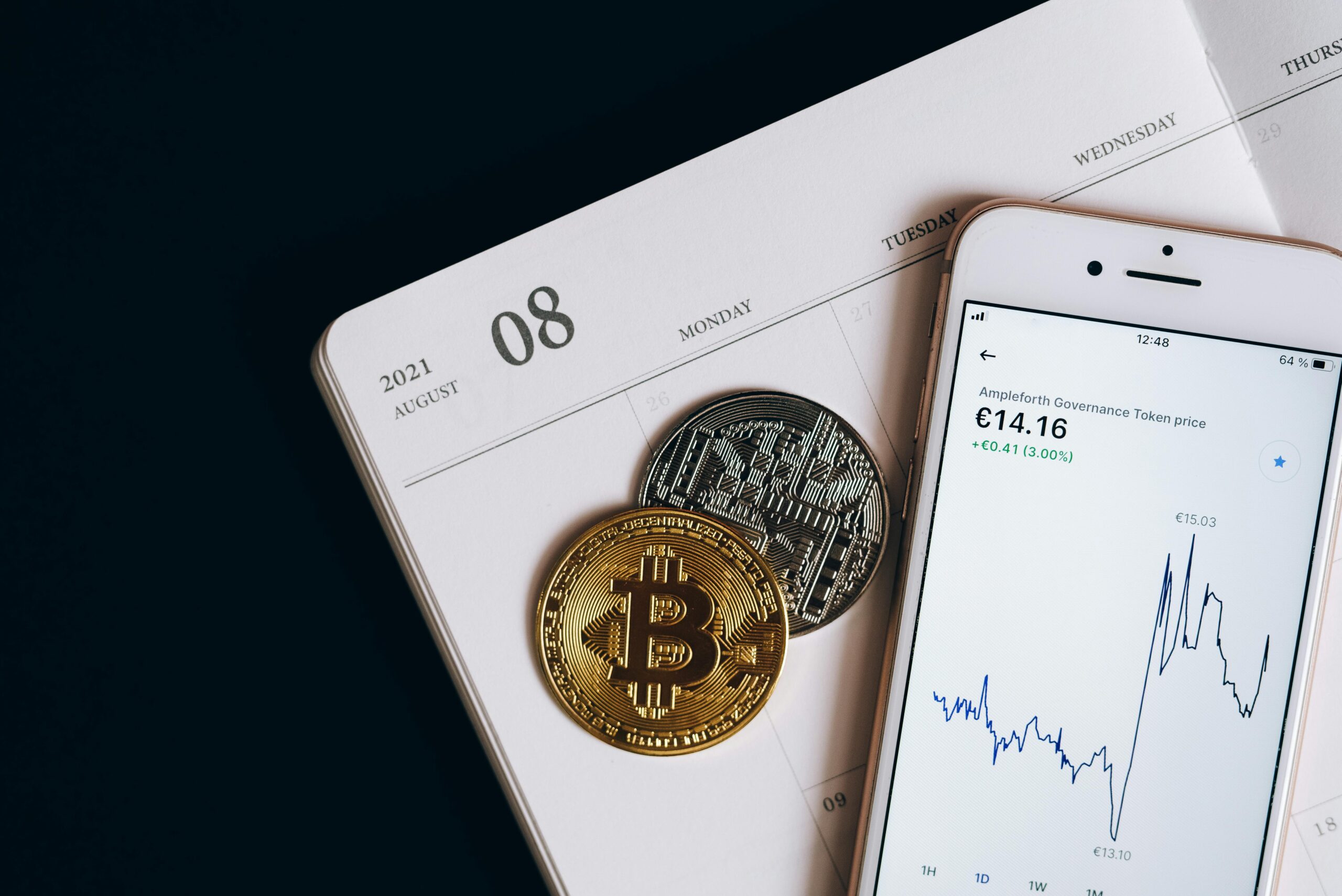
Artificial intelligence is transforming how investors manage and tokenize their portfolios, creating unprecedented opportunities for wealth optimization and democratized access to financial markets worldwide.

🚀 The Dawn of AI-Powered Portfolio Tokenization
The financial landscape is undergoing a seismic shift as artificial intelligence converges with blockchain technology to revolutionize portfolio management. Portfolio tokenization, the process of converting traditional investment assets into digital tokens on a blockchain, has emerged as one of the most promising innovations in modern finance. When combined with AI’s analytical prowess, this technology creates a powerful ecosystem that promises to democratize investment opportunities while enhancing efficiency and transparency.
Traditional portfolio management has long been plagued by inefficiencies, high barriers to entry, and limited accessibility for retail investors. The tokenization revolution, powered by artificial intelligence, is dismantling these barriers by enabling fractional ownership, automated compliance, and intelligent asset allocation strategies that were previously available only to institutional investors.
The convergence of these technologies represents more than just incremental improvement. It’s a fundamental reimagining of how assets are owned, traded, and managed in the digital age. AI algorithms can now analyze vast datasets, predict market trends, and execute trades with precision that far exceeds human capabilities, while blockchain technology ensures transparency, security, and immutability of ownership records.
Understanding Portfolio Tokenization in the AI Era
Portfolio tokenization involves representing ownership rights of various assets as digital tokens on a blockchain network. These assets can range from traditional securities like stocks and bonds to alternative investments including real estate, fine art, commodities, and even intellectual property. Each token represents a specific fraction of the underlying asset, enabling investors to purchase and trade portions of high-value assets that would otherwise be inaccessible.
The integration of artificial intelligence into this process elevates tokenization from a simple digitization exercise to an intelligent, adaptive system. AI algorithms continuously monitor market conditions, assess risk factors, rebalance portfolios, and identify optimization opportunities in real-time. This dynamic approach ensures that tokenized portfolios remain aligned with investor objectives while adapting to changing market dynamics.
The Technical Foundation of AI-Driven Tokenization
At its core, AI-powered portfolio tokenization relies on several interconnected technological components. Smart contracts automate the execution of investment strategies based on predefined rules and AI-generated insights. Machine learning models analyze historical data, identify patterns, and generate predictive analytics that inform investment decisions. Natural language processing enables AI systems to parse news articles, financial reports, and social media sentiment to gauge market sentiment.
Blockchain technology provides the immutable ledger that records all transactions and ownership changes, ensuring transparency and eliminating the need for intermediaries. The combination creates a self-executing, self-optimizing investment ecosystem that operates with minimal human intervention while maintaining security and regulatory compliance.
💡 How AI Enhances Tokenized Portfolio Management
Artificial intelligence brings transformative capabilities to tokenized portfolio management across multiple dimensions. These enhancements address longstanding challenges in traditional investment management while creating entirely new possibilities for wealth optimization.
Intelligent Asset Allocation and Rebalancing
AI algorithms excel at optimizing asset allocation by processing multiple variables simultaneously. They consider investor risk tolerance, time horizons, market conditions, correlation between assets, and macroeconomic indicators to construct optimally diversified portfolios. Unlike traditional rebalancing schedules that operate on fixed timeframes, AI-driven systems continuously monitor portfolio composition and trigger rebalancing actions when deviations from target allocations exceed predetermined thresholds.
This dynamic approach ensures portfolios remain optimized without the lag time inherent in traditional quarterly or annual rebalancing cycles. Machine learning models identify subtle market inefficiencies and arbitrage opportunities that human analysts might overlook, potentially generating alpha for investors.
Risk Assessment and Mitigation
Risk management represents one of AI’s most valuable contributions to tokenized portfolios. Advanced algorithms analyze historical volatility, correlation matrices, tail risk scenarios, and emerging market signals to provide comprehensive risk assessments. These systems can identify potential threats before they materialize, enabling proactive risk mitigation strategies.
AI models simulate thousands of potential market scenarios, stress-testing portfolios against various economic conditions, geopolitical events, and market shocks. This forward-looking risk analysis allows investors to understand potential downside exposure and adjust positions accordingly, providing a level of risk visibility that traditional methods cannot match.
Fraud Detection and Security Enhancement
The immutable nature of blockchain provides inherent security benefits, but AI adds an additional layer of protection. Machine learning algorithms detect unusual transaction patterns, identify potential security breaches, and flag suspicious activities in real-time. These systems learn from historical fraud patterns and adapt to emerging threats, creating increasingly robust security frameworks.
Natural language processing algorithms can also analyze smart contract code to identify vulnerabilities before deployment, reducing the risk of exploits that have plagued some blockchain projects. This proactive security approach builds investor confidence in tokenized investment platforms.
🌍 Democratizing Investment Access Through Tokenization
One of the most compelling aspects of AI-powered portfolio tokenization is its potential to democratize access to investment opportunities previously reserved for wealthy individuals and institutional investors. Fractional ownership enabled by tokenization lowers the minimum investment threshold for high-value assets, while AI-driven platforms provide sophisticated portfolio management capabilities to retail investors.
Consider real estate investment as an example. Traditional real estate investing requires substantial capital to purchase properties, along with expertise in property management, market analysis, and legal compliance. Tokenized real estate portfolios, managed by AI algorithms, enable investors to purchase tokens representing fractional ownership in diversified property portfolios with investments as small as a few hundred dollars.
The AI component handles property selection, tenant management optimization, maintenance scheduling, and portfolio rebalancing across different property types and geographic locations. Investors gain exposure to real estate returns without the traditional barriers of capital requirements, expertise, and management responsibilities.
Global Market Access and 24/7 Trading
Tokenization combined with AI creates truly global investment platforms that operate continuously. Unlike traditional markets with fixed trading hours and geographic restrictions, tokenized assets can be traded around the clock on blockchain networks. AI algorithms optimize trade execution timing based on liquidity conditions, price movements, and transaction costs across different trading venues.
This continuous operation enables investors worldwide to participate in markets regardless of their location or local trading hours. The elimination of geographic barriers creates more efficient price discovery and enhanced liquidity, benefiting all market participants.
📊 Real-World Applications and Use Cases
The theoretical benefits of AI-powered portfolio tokenization are compelling, but real-world implementations demonstrate the practical value of these technologies. Several innovative platforms are already leveraging these capabilities to transform various investment sectors.
Tokenized Securities and Equity Portfolios
Several platforms now offer tokenized securities that represent fractional ownership in company equity, bonds, and fund shares. AI algorithms construct optimized portfolios based on investor preferences, automatically rebalancing across tokenized securities to maintain target allocations. These platforms provide institutional-grade portfolio management to retail investors at a fraction of traditional management fees.
The transparency of blockchain-based ownership records combined with AI-generated performance analytics gives investors unprecedented visibility into their holdings and the factors driving returns. This transparency builds trust and enables more informed investment decisions.
Alternative Asset Tokenization
Beyond traditional securities, tokenization is opening access to alternative investments including art, collectibles, commodities, and private equity. AI algorithms assess the value of these often-illiquid assets by analyzing comparable sales, market trends, and qualitative factors. This creates more efficient pricing mechanisms for assets that traditionally lack transparent markets.
Investors can now build diversified portfolios spanning multiple alternative asset classes, with AI managing the complexity of valuation, allocation, and rebalancing across assets with different liquidity profiles and return characteristics.
Personalized Investment Strategies
AI-powered tokenization platforms can create highly personalized investment strategies tailored to individual investor circumstances. Machine learning models consider not just financial goals and risk tolerance, but also tax situations, ethical preferences, liquidity needs, and life stage factors. The result is truly customized portfolios that evolve as investor circumstances change.
These personalized strategies were previously available only through expensive private wealth management services. Tokenization and AI democratize access to this level of customization, making sophisticated wealth management available to a broader investor base.
🔒 Regulatory Considerations and Compliance Automation
The innovative nature of tokenized assets raises important regulatory questions that must be addressed for widespread adoption. Different jurisdictions have varying approaches to digital asset regulation, creating compliance challenges for platforms operating globally. AI provides powerful tools for navigating this complex regulatory landscape.
Automated compliance systems use AI to monitor regulatory requirements across multiple jurisdictions, ensuring that tokenized offerings and trading activities remain compliant with applicable securities laws, anti-money laundering regulations, and investor protection requirements. Natural language processing algorithms can parse regulatory updates and automatically adjust platform operations to maintain compliance.
Smart contracts can embed compliance rules directly into token protocols, automatically enforcing transfer restrictions, investor eligibility requirements, and regulatory reporting obligations. This programmable compliance reduces regulatory risk while minimizing the operational burden of manual compliance processes.
Know Your Customer and Anti-Money Laundering
AI significantly enhances KYC and AML processes for tokenized investment platforms. Facial recognition, document verification algorithms, and behavioral analysis identify investors and detect fraudulent identity claims. Transaction monitoring systems flag suspicious patterns that might indicate money laundering or other illicit activities.
These automated systems process verification requests faster than manual review while maintaining higher accuracy rates, improving the investor onboarding experience while strengthening compliance safeguards.
🎯 The Investment Benefits of AI-Powered Tokenization
Investors who embrace AI-powered portfolio tokenization can realize several concrete benefits compared to traditional investment approaches. Understanding these advantages helps investors evaluate whether tokenized portfolios align with their financial objectives.
Cost Efficiency and Fee Reduction
Traditional investment management involves multiple intermediaries including brokers, custodians, transfer agents, and fund administrators, each extracting fees. Tokenization eliminates many of these intermediaries by automating functions through smart contracts and AI algorithms. The resulting cost savings translate to lower fees for investors, potentially improving long-term returns significantly.
AI-driven portfolio management also operates more efficiently than human advisors, analyzing more data and executing more trades without proportional cost increases. This scalability enables sophisticated portfolio management at price points accessible to retail investors.
Enhanced Liquidity
Tokenization creates secondary markets for traditionally illiquid assets, enabling investors to exit positions without waiting for redemption windows or finding direct buyers. AI-powered market-making algorithms provide liquidity by continuously quoting bid and ask prices, facilitating trading even in less liquid tokenized assets.
This enhanced liquidity reduces the liquidity premium required for illiquid investments, potentially improving returns while giving investors greater flexibility to adjust portfolios as circumstances change.
Transparency and Real-Time Reporting
Blockchain-based ownership records provide complete transparency of portfolio holdings and transaction history. AI-generated analytics dashboards present this information in intuitive formats, showing real-time portfolio values, performance attribution, risk metrics, and fee breakdowns. This transparency empowers investors to monitor their investments continuously rather than waiting for quarterly statements.
The immutable audit trail of blockchain transactions also simplifies tax reporting and provides verifiable records for regulatory or legal purposes, reducing administrative burdens for investors.
⚡ Challenges and Considerations for Adoption
Despite the compelling benefits, AI-powered portfolio tokenization faces several challenges that must be addressed for mainstream adoption. Understanding these obstacles helps set realistic expectations and identifies areas requiring further development.
Technical Infrastructure and Scalability
Current blockchain networks face scalability limitations that can constrain transaction throughput and increase costs during periods of high demand. While layer-2 solutions and next-generation blockchain protocols promise improved performance, achieving the scale required for mass-market adoption remains an ongoing challenge.
AI algorithms also require substantial computational resources, particularly for complex portfolio optimization and risk analysis. Ensuring these systems remain cost-effective as they scale to serve millions of investors requires continued technological innovation.
Regulatory Uncertainty
The evolving regulatory landscape for digital assets creates uncertainty for investors and platform operators. Different jurisdictions take varying approaches to tokenized securities, creating compliance complexity for global platforms. Clear, consistent regulatory frameworks will be essential for unlocking the full potential of portfolio tokenization.
Investors should carefully evaluate the regulatory compliance of tokenization platforms and understand the legal status of tokenized assets in their jurisdiction before investing.
Education and User Experience
The technical complexity of blockchain and AI can intimidate potential investors unfamiliar with these technologies. Simplifying user interfaces and providing educational resources to help investors understand tokenized portfolios is essential for widespread adoption. Platforms must balance sophisticated capabilities with intuitive experiences that don’t require technical expertise.
🌟 The Future Trajectory of Tokenized Investments
Looking ahead, the convergence of AI and blockchain technology in portfolio management appears poised for continued growth and innovation. Several trends will likely shape the evolution of this space in coming years.
Interoperability between different blockchain networks will enable seamless portfolio construction across multiple platforms and asset types. AI algorithms will coordinate investments across chains, optimizing for best execution and lowest costs. Decentralized finance protocols will provide new mechanisms for lending, borrowing, and deriving yield from tokenized assets, creating additional return opportunities.
Artificial intelligence capabilities will continue advancing, with more sophisticated predictive models, better risk assessment, and enhanced personalization. Quantum computing may eventually enable AI systems to solve optimization problems currently beyond reach, further improving portfolio construction and management.
The integration of tokenized assets with traditional financial systems will deepen as regulatory clarity emerges and institutional adoption increases. Banks and asset managers will likely offer tokenized investment products alongside traditional offerings, creating hybrid portfolios that leverage the benefits of both approaches.

🎓 Making Informed Decisions About Tokenized Portfolios
For investors considering AI-powered tokenized portfolios, several factors warrant careful evaluation. Assessing the credibility and track record of platform operators is essential, as the technology’s novelty means historical performance data may be limited. Understanding the underlying assets, tokenization structure, and AI methodologies helps investors gauge whether these approaches align with their risk tolerance and objectives.
Diversification remains important even within tokenized portfolios. Investors should avoid concentrating too heavily in any single tokenized asset class or platform. Combining tokenized investments with traditional holdings can provide balanced exposure while managing the unique risks of emerging technologies.
Staying informed about regulatory developments, technological advances, and market trends enables investors to adapt their strategies as the tokenization ecosystem evolves. The rapid pace of innovation in this space means continuous learning is essential for maximizing opportunities while managing risks.
The revolution in portfolio tokenization powered by artificial intelligence represents a fundamental shift in how individuals can access, manage, and benefit from investment opportunities. By lowering barriers, enhancing efficiency, and providing sophisticated management capabilities to a broader audience, these technologies promise to democratize wealth creation in unprecedented ways. While challenges remain, the trajectory is clear: tokenized, AI-managed portfolios will increasingly become a cornerstone of modern investment strategies, unlocking financial futures for investors worldwide.