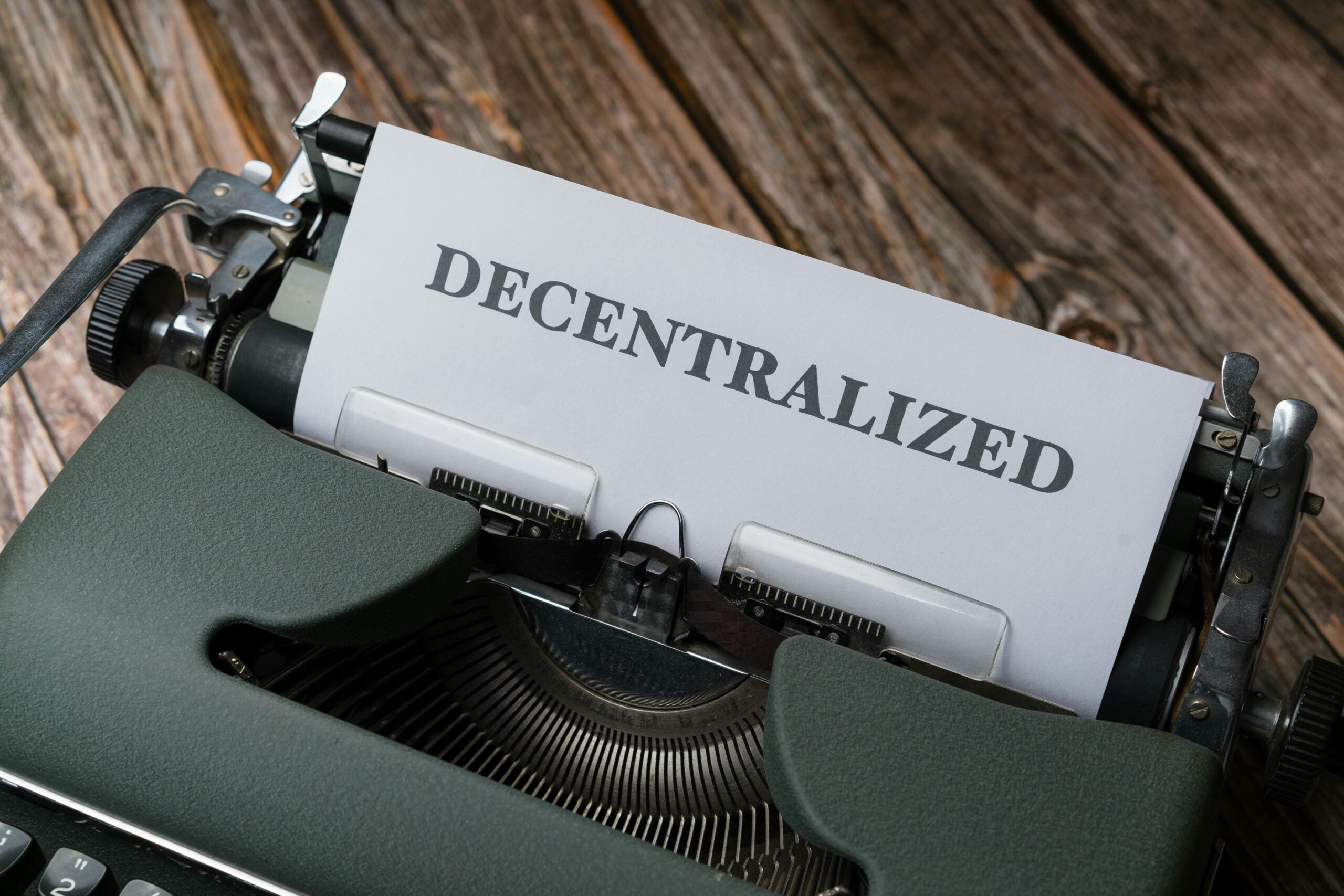
Decentralized Autonomous Organizations are reshaping how we think about economic coordination, governance, and value creation in the digital age. 🚀

The traditional economic landscape has long been dominated by centralized institutions, hierarchical management structures, and intermediaries that extract value while controlling decision-making processes. However, the emergence of blockchain technology has introduced a revolutionary alternative: DAO-based systems that promise to unlock unprecedented economic potential through transparent, trustless, and community-driven frameworks.
These innovative organizational structures are not merely technological experiments but represent a fundamental shift in how resources can be allocated, businesses can operate, and communities can coordinate economic activity at scale. By eliminating traditional gatekeepers and enabling direct peer-to-peer collaboration, DAOs are creating new pathways for wealth generation, financial inclusion, and economic empowerment across global communities.
🌐 Understanding the Foundation of DAO-Based Economic Systems
At their core, Decentralized Autonomous Organizations operate through smart contracts deployed on blockchain networks, establishing rules and governance mechanisms that execute automatically without human intervention. This technological foundation creates an environment where trust is embedded in code rather than institutional reputation, fundamentally altering the cost structure of economic coordination.
The economic implications of this shift cannot be overstated. Traditional organizations spend significant resources on management overhead, compliance systems, and trust verification mechanisms. DAOs dramatically reduce these friction costs by automating governance processes, creating transparent audit trails, and enabling programmable money flows that execute according to predetermined conditions.
Moreover, DAO-based systems democratize access to economic opportunities by removing geographical barriers and reducing minimum participation thresholds. A developer in Lagos can contribute to the same project as someone in San Francisco, receiving compensation directly through cryptocurrency without requiring traditional banking infrastructure or international payment processors that charge prohibitive fees.
💡 Revolutionary Economic Models Enabled by DAOs
The flexibility of DAO frameworks has spawned diverse economic models that were previously impossible or impractical to implement. These range from investment collectives pooling resources for collective decision-making to protocol-owned liquidity systems that fundamentally change how financial markets operate.
Collective Capital Formation and Deployment
Investment DAOs have emerged as powerful vehicles for democratizing access to venture capital and other investment opportunities traditionally reserved for wealthy individuals and institutional investors. Members pool capital, participate in due diligence processes, and vote on investment decisions, creating a meritocratic system where good ideas and thorough analysis matter more than social connections or institutional affiliations.
This model has proven particularly effective in the cryptocurrency and blockchain space, where investment DAOs have collectively deployed hundreds of millions of dollars into promising projects. The transparent nature of blockchain technology means every member can verify fund movements, review investment performance, and participate actively in portfolio management decisions.
Protocol-Owned Value and Sustainable Economics
Perhaps the most innovative economic model emerging from DAO ecosystems is protocol-owned liquidity and value accrual. Rather than value flowing to external shareholders or venture capitalists, protocols governed by DAOs can accumulate assets within their treasuries, creating self-sustaining economic systems that benefit direct participants and users.
This approach fundamentally changes incentive structures. Instead of extracting maximum value from users to satisfy external investors, DAO-governed protocols can optimize for long-term sustainability, user experience, and community benefit. Treasury assets can be deployed strategically to incentivize desired behaviors, fund development initiatives, or provide insurance against systemic risks.
📊 Measuring the Economic Impact of DAO Systems
The quantifiable economic impact of DAOs has grown exponentially over recent years, with billions of dollars now managed by these decentralized organizations. The Total Value Locked (TVL) in DAO-governed protocols serves as one metric for assessing their economic significance, though this captures only a fraction of their broader impact.
More importantly, DAOs are creating economic value through several less tangible but equally significant mechanisms. They reduce transaction costs for coordinating economic activity, lower barriers to entry for entrepreneurs and contributors, and create more efficient price discovery mechanisms through transparent governance processes.
Research into DAO economics reveals fascinating patterns about human coordination and incentive design. Organizations with well-designed tokenomics and governance frameworks consistently outperform those with poorly aligned incentives, demonstrating that economic mechanism design remains crucial even in decentralized contexts.
Comparative Efficiency Metrics
When comparing DAO-based economic systems to traditional organizational structures, several efficiency advantages become apparent. Administrative overhead as a percentage of total resources managed typically runs significantly lower in DAOs, with automated processes handling tasks that would require entire departments in conventional organizations.
Decision-making speed presents a more nuanced picture. While simple operational decisions can execute instantly through smart contracts, complex strategic decisions requiring community consensus may take longer than centralized executive action. However, this slower deliberation often produces more robust decisions with stronger stakeholder buy-in, reducing implementation resistance and revision costs.
🔓 Breaking Down Traditional Economic Barriers
Perhaps the most profound economic potential unlocked by DAOs lies in their ability to dismantle barriers that have historically excluded billions of people from participating in global economic systems. Traditional financial infrastructure requires extensive documentation, minimum account balances, and physical presence that systematically exclude populations in developing economies.
DAO-based systems operate with minimal entry requirements. Anyone with internet access and a cryptocurrency wallet can participate in governance, contribute labor or capital, and receive compensation. This radical accessibility creates opportunities for economic participation regardless of nationality, credit history, or social status.
The implications for global economic development are staggering. Talented individuals in economies with limited opportunities can now contribute to international projects, building reputation and earning income in hard currencies that hold value better than their local alternatives. This global labor market efficiency benefits both contributors earning above-market rates for their regions and projects accessing specialized talent at competitive prices.
Financial Inclusion Through Decentralized Systems
DAOs are pioneering new approaches to financial services that serve populations ignored by traditional institutions. Decentralized lending protocols governed by DAOs provide access to credit based on on-chain collateral rather than credit scores or banking relationships. This creates borrowing opportunities for individuals and small businesses that would never qualify for conventional loans.
Similarly, DAO-governed insurance protocols are developing parametric insurance products that automatically pay claims when predetermined conditions occur, eliminating the claims adjustment process that often disadvantages policyholders with limited legal resources. These innovations are particularly valuable in developing economies where traditional insurance penetration remains extremely low.
⚡ Accelerating Innovation Through Decentralized Coordination
The economic potential of DAOs extends beyond efficiency gains to fundamentally accelerating innovation cycles. Open-source development has long demonstrated that decentralized collaboration can produce remarkable results, but monetization challenges limited its application. DAOs solve this problem by creating sustainable economic models for open-source development and community-driven innovation.
Protocol DAOs can allocate treasury resources to fund feature development, security audits, and ecosystem growth initiatives through transparent governance processes. This creates a direct feedback loop where users who benefit from improvements can vote to fund them, aligning development priorities with actual user needs rather than executive preferences or investor demands.
Furthermore, composability within blockchain ecosystems means innovations by one DAO can be instantly leveraged by others, creating network effects that accelerate progress across entire industries. This permissionless innovation environment contrasts sharply with traditional sectors where intellectual property restrictions and competitive moats slow technology diffusion.
🛡️ Addressing Challenges and Risk Factors
While DAO-based systems offer tremendous economic potential, realizing this potential requires addressing significant challenges. Security vulnerabilities in smart contracts pose existential risks, as immutable code errors cannot be easily corrected once deployed. High-profile incidents where DAOs lost millions to exploits demonstrate that technical security remains paramount.
Governance challenges also threaten DAO economic viability. Voter apathy, whale dominance, and coordination failures can undermine the democratic promise of decentralized governance. Many DAOs struggle with low participation rates, where token holders eligible to vote on critical decisions choose not to engage, potentially allowing small groups to control outcomes.
Regulatory uncertainty presents another significant risk factor. Governments worldwide are still determining how to classify and regulate DAOs, creating legal ambiguity that complicates compliance and exposes participants to potential liability. This uncertainty particularly affects DAOs seeking to operate in regulated industries like financial services or real estate.
Evolving Solutions and Best Practices
The DAO ecosystem is actively developing solutions to these challenges. Formal verification methods are improving smart contract security, while insurance protocols provide protection against exploit losses. Governance innovations like delegation systems, quadratic voting, and conviction voting address participation and plutocracy concerns by creating more nuanced decision-making mechanisms.
Progressive decentralization strategies offer a pragmatic path forward, where projects launch with centralized control for rapid iteration and security responsiveness, then gradually transition governance to community control as systems mature and stabilize. This approach balances innovation speed with decentralization benefits while managing risk during vulnerable early stages.
🌟 Real-World Economic Transformation Stories
Beyond theoretical potential, DAOs are already delivering tangible economic benefits across diverse contexts. Decentralized finance protocols governed by DAOs have processed trillions of dollars in transaction volume, providing financial services at fraction of traditional costs while sharing economic value with token holders rather than extracting it for shareholders.
Creator economy DAOs are empowering artists, musicians, and content creators to build sustainable businesses with direct fan support, eliminating exploitative intermediaries who historically captured the majority of value. These communities pool resources for marketing, legal support, and infrastructure while maintaining individual creative autonomy.
Service DAOs are establishing new models for professional services delivery, where consultants, designers, and developers collaborate on client projects while sharing administrative infrastructure and reputation. These collectives achieve economies of scale previously available only to large firms while maintaining the flexibility and innovation capacity of independent practitioners.
🚀 Future Trajectories and Economic Possibilities
The economic potential of DAO-based systems will likely expand dramatically as technology matures and adoption accelerates. Integration with artificial intelligence could enable sophisticated autonomous economic agents that optimize resource allocation and execute complex strategies while remaining accountable to human governance frameworks.
Cross-chain interoperability protocols are enabling DAOs to operate across multiple blockchain networks, accessing liquidity and functionality regardless of where it exists. This technological development mirrors how internet protocols enabled seamless communication across different networks, potentially creating a similarly transformative impact on economic coordination.
Real-world asset tokenization governed through DAO frameworks could unlock trillions in illiquid value, enabling fractional ownership of real estate, art, intellectual property, and infrastructure. This would democratize access to investment opportunities while creating more efficient markets through increased liquidity and transparent price discovery.
💼 Practical Steps for Economic Participation
For individuals and organizations seeking to harness DAO economic potential, several practical entry points exist. Participating in existing DAO governance provides valuable experience while contributing to protocol development. Many DAOs actively seek contributors across diverse skill sets, from technical development to community management and strategic planning.
Launching new DAOs has become increasingly accessible through frameworks and tools that handle technical complexity, allowing founders to focus on economic design and community building. However, success requires careful attention to tokenomics, governance mechanisms, and value proposition clarity to attract and retain participants.
Educational investment remains crucial, as DAO participation requires understanding blockchain fundamentals, governance dynamics, and economic mechanism design. Fortunately, extensive resources now exist, from online courses to active communities where experienced participants mentor newcomers, lowering knowledge barriers that previously limited participation.

🔮 Reimagining Economic Coordination for Digital Natives
The ultimate promise of DAO-based systems lies not merely in incremental efficiency improvements but in fundamentally reimagining how humans coordinate economic activity. As digital natives who grew up with social media, online gaming, and remote collaboration enter their prime productive years, organizational structures designed for industrial-era constraints increasingly feel archaic.
DAOs offer an organizational paradigm native to digital environments, where geographical proximity matters little, trust emerges from transparent systems rather than personal relationships, and contribution matters more than credentials. This alignment with how digital natives naturally collaborate suggests DAOs may become dominant organizational forms for coordination-intensive economic activity.
The transition will not happen overnight, and hybrid models blending traditional and decentralized elements will likely persist for decades. However, the direction of travel appears clear: toward more open, transparent, and participatory economic systems that unlock human potential by removing artificial barriers and aligning incentives around collective value creation.
The economic potential unlocked by DAO-based systems represents one of the most significant organizational innovations since the corporation itself. By reducing coordination costs, democratizing access, and creating sustainable value-sharing mechanisms, DAOs are not just improving existing systems but enabling entirely new categories of economic activity. As technology matures and adoption grows, these decentralized organizations may fundamentally reshape global economic structures, creating more inclusive, efficient, and innovative systems that better serve all participants. The revolution is already underway—the question is not whether DAOs will transform economics, but how quickly and completely that transformation will occur. 🌍